Press release —
GEHWOL Diabetes Report 2025-2026: Diabetic foot: Prevention can only be achieved through a joint effort
Early prevention of diabetic foot syndrome (DFS) remains one of the greatest challenges in the care of people with diabetes. The new GEHWOL Diabetes Report shows that significantly more patients than in previous survey rounds are aware of the risks and even possess specialist knowledge – yet important opportunities are being missed at the points of interface. For the first time, the report surveyed not only people with diabetes and GPs, but also included podiatrists as key partners in prevention. The results paint a clear picture: prevention is most successful where professionals act in a coordinated manner, provide patients with clear guidance, and where structural conditions facilitate collaboration.
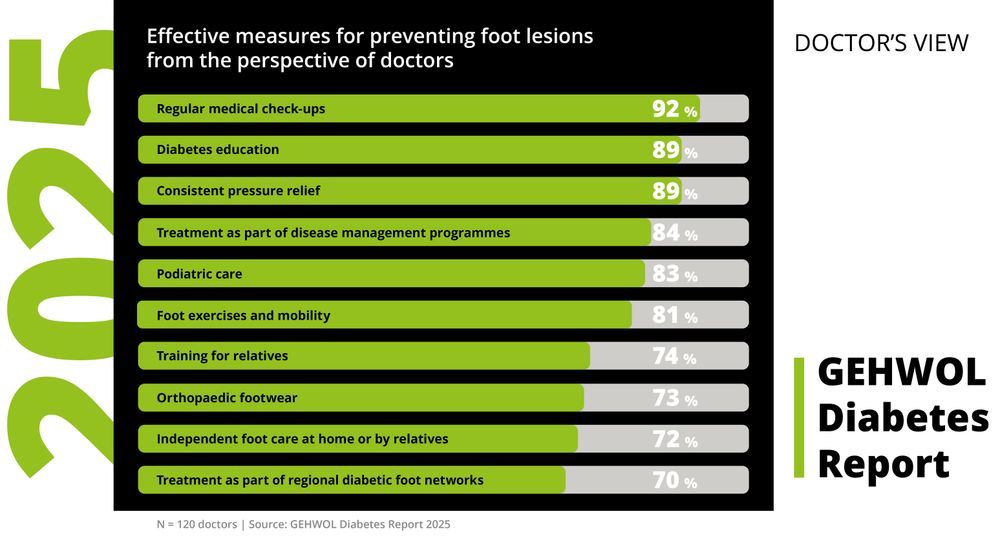
Awareness of risks relating to diabetic foot is primarily raised among patients by healthcare professionals. Doctors, podiatrists and diabetes counsellors are therefore not only healthcare providers but also key guides in the everyday lives of those affected. Patients themselves see targeted education as a crucial catalyst for implementing preventive measures in the first place. At the same time, the report makes it clear that prevention can only be sustainable if advice, training and guidance are provided in a coordinated manner. Isolated measures by individual professional groups fall short – what is needed is a common language that reaches patients and provides guidance. The fact that communication is key is also evident from the doctors’ perspective: 70 per cent cite a good relationship of trust as the most important factor in motivating patients to practise consistent foot care. 65 per cent emphasise the importance of clear communication, and 58 per cent see agreed objectives as a key lever for making prevention a practical part of everyday life.
Structural barriers hinder prevention in day-to-day care
Both doctors and podiatrists view prevention not merely as a knowledge-based issue, but as a structural challenge. Heavy workloads, bureaucratic requirements and limited resources make it difficult to consistently integrate prevention into day-to-day practice. Whilst many practices already work within networks to better support at-risk patients, these structures are not established across the board. Disease management programmes and certified foot care networks are effective where they are actively implemented – but often remain isolated initiatives. Podiatrists in particular report that the system is under pressure: 90 per cent are not currently active in a foot care network, primarily because the bureaucratic and documentation burden is perceived as too high (33 per cent). At the same time, more than a third indicate a willingness in principle, provided the framework conditions and support were in place. The report thus clearly shows that interdisciplinary collaboration is desired – but it requires sustainable structures, economic incentives and fewer administrative hurdles in order to embed prevention in the long term.
Podiatry is central – but not yet utilised sufficiently
One particularly clear finding concerns the role of podiatry: It is regarded by both doctors and podiatrists as a fundamental building block of DFS prevention – yet remains underutilised in clinical practice to date. For instance, 87 per cent of doctors emphasise the preventive benefits of podiatric services. Looking further into the future, 92 per cent advocate an expansion of therapeutic competences, for example in wound management, provided the relevant qualifications are held. Despite this clear professional consensus, only around 37 per cent of patients currently receive podiatric care – often with only partial reimbursement from their health insurance. The patients’ perspective highlights the potential for prevention: 60 per cent would use podiatric services more frequently if the costs were fully covered. This presents a crucial starting point for early, low-threshold prevention – even before a patient is entitled to a prescription. This depends on doctors’ willingness to highlight the options for professional foot care and orthopaedic footwear support to patients, even without a prescription for medicinal products.
Patients need motivation – and tangible results in their everyday lives
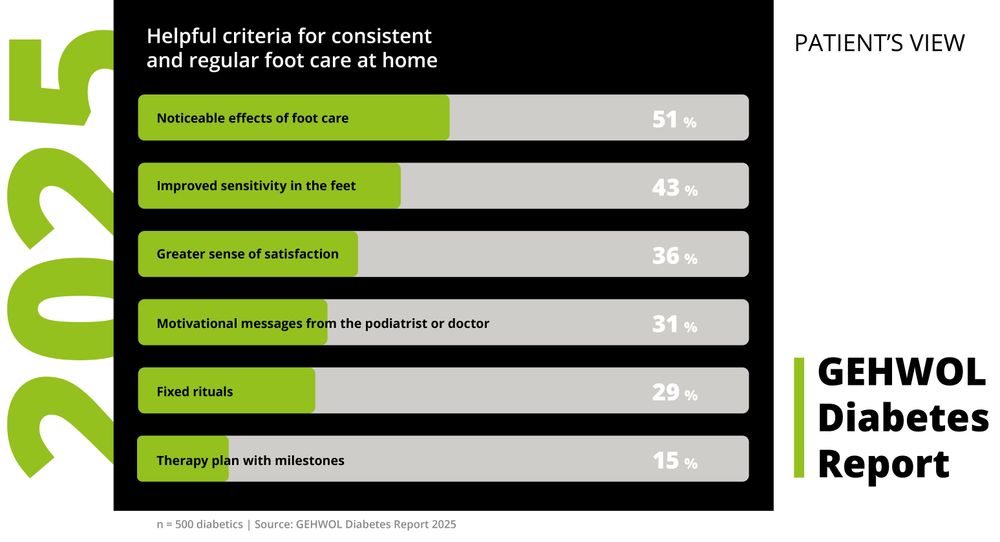
At first glance, the patient perspective paints a positive picture: the vast majority take foot health seriously. 86 per cent consider foot care to be important or very important, and 77 per cent look after their feet regularly. Yet beneath the surface, prevention remains fragile. Older people in particular often misjudge their risk and miss recommended preventive check-ups. Prevention rarely fails due to a lack of information – but rather due to a lack of motivation, everyday routines and the absence of an immediate ‘reward effect’. The report shows that patients want professional guidance and support. Visible improvements in care (‘better skin condition’, fewer pressure sores) are the most effective in establishing long-term routines. Here, too, communication plays a key role: 31 per cent of patients cite motivational advice from medical or podiatry professionals as a decisive factor in helping them to follow their care regime more consistently. Personal responsibility develops where specialists provide clear guidance, make progress visible and set realistic goals.
Conclusion: Prevention can only succeed through collaboration
The three perspectives presented in the report lead to a common conclusion: prevention has entered the public consciousness – yet its potential is not yet being fully realised. An expanded range of services and reimbursement options for podiatrists, structural relief for service providers, and the consistent empowerment of patients are regarded as key areas for action. The GEHWOL Diabetes Report 2025–2026 is therefore intended not only as a stock-take, but also as a catalyst for care that makes amputations avoidable and safeguards quality of life in the long term.
Diabetes Report Fact Sheet
The GEHWOL Diabetes Report has been published by Eduard Gerlach GmbH (GEHWOL) since 2009 and regularly provides a well-founded overview of the prevention of diabetic foot syndrome (DFS). Since 2023, the report has been produced in collaboration with Statista Research. The 2025 edition included podiatrists systematically for the first time – alongside doctors and patients.
Methodology:
- Doctor survey: n = 120 (online
- Podiatrist survey: n = 30 (telephone interviews)
- Patient survey: n = 500 people with diabetes (online)
- Conducted by: Statista Research (June/July 2025
The report is published as a free white paper and is available at:
https://www.gehwol.de/en/news/...
Abdruck honorarfrei / Beleg erbeten
Related links
Topics
Categories
With its GEHWOL brand cosmos, Eduard Gerlach GmbH is one of the most popular full-range suppliers of foot care products and technology and the market leader in the specialised foot care trade. Based on in-house research and development, the full range includes cosmetics, medical products and pharmaceuticals for foot care and foot health with different dosage forms, galenics and active ingredient formulations as well as for different skin types and skin problems. The products are available exclusively in foot care and podiatry practices, cosmetic institutes and pharmacies.